

Table of Contents
- Why Regular Cleaning Matters for Moissanite Jewelry
- What You'll Need: Simple Supplies for Cleaning Moissanite
- How to Clean Moissanite Rings at Home
- Cleaning Moissanite with Dish Soap: Best Practices
- How Often to Clean Moissanite Jewelry
- What to Avoid When Cleaning Moissanite
- Troubleshooting Persistent Cloudiness and Buildup
- Common Mistakes to Avoid
- Frequently Asked Questions
Last Updated: October 18, 2026
Why Regular Cleaning Matters for Moissanite Jewelry
Moissanite jewelry deserves the same care as any cherished piece you wear daily. Over time, skin oils, dust, and everyday residue build up and dull the sparkle that makes moissanite so captivating. Regular cleaning keeps your stones looking fresh and maintains that exceptional fire and brilliance.
At Bee-Bees, we know moissanite's 9.25 Mohs hardness makes it perfect for everyday wear, but brilliance still requires maintenance. The good news? Learning how to clean moissanite at home is simple, affordable, and takes just minutes.
This guide covers how to clean moissanite rings, chains, and other jewelry with supplies you likely already have, plus the best methods, what to avoid, and how to troubleshoot a stone that loses its glow.

What You'll Need: Simple Supplies for Cleaning Moissanite
You don't need expensive solutions or professional equipment. Here's what works:
- Warm water (lukewarm, not hot)
- Mild dish soap (any gentle, moisturizer-free brand)
- Small bowl (ceramic or glass)
- Soft-bristled toothbrush (a baby toothbrush works perfectly)
- Soft cloth (microfiber or lint-free cotton)
- Optional: soft sponge or lint-free towel
These everyday items are all you need to restore your moissanite's sparkle.
How to Clean Moissanite Rings at Home
Cleaning a moissanite ring is straightforward when you follow these steps, and the method works for solitaire, multi-stone, and any prong or band style. But the setting matters as much as the stone: a D color, VVS1 clarity moissanite in sterling silver or gold plating stays brilliant only if you clean metal and stone together and adjust your technique to how the ring is built.
Step 1: Soak Your Ring in Warm Water
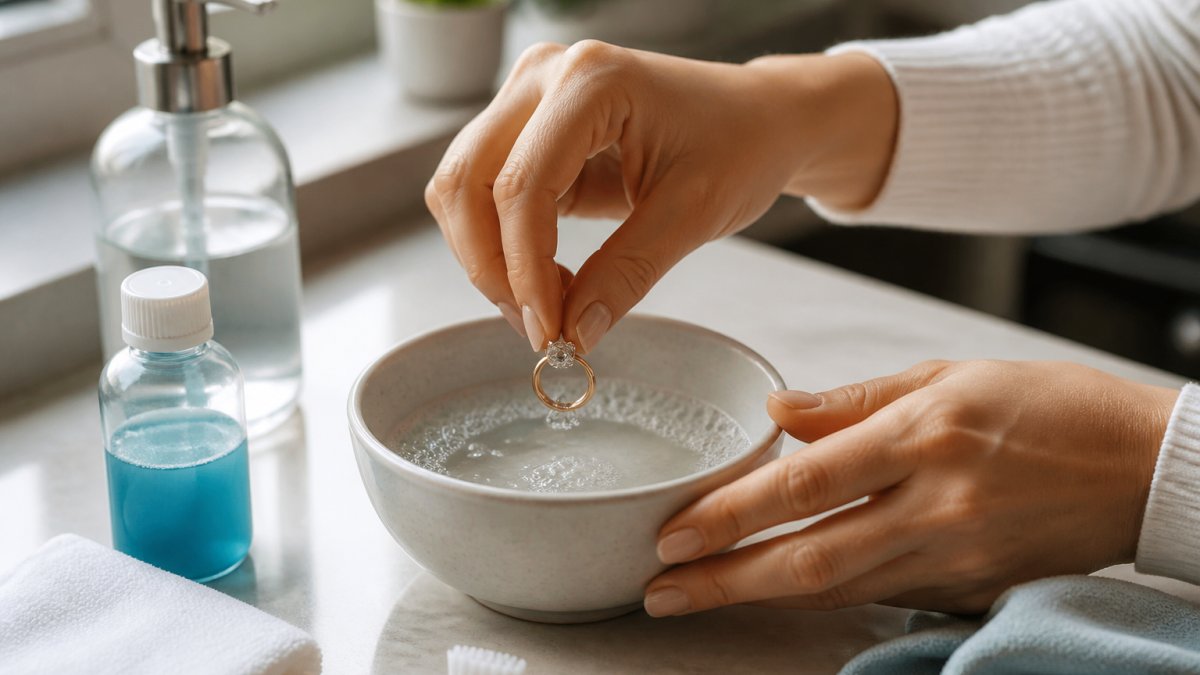
Fill your small bowl with warm water, not hot, hot water can damage some metal settings or finishes over time. Place your moissanite ring in the bowl and let it soak for 5-10 minutes to soften oils and dirt so they lift gently.
Step 2: Add Mild Dish Soap to the Cleaning Solution
Add a few drops of mild dish soap to your warm water. You want soapy water, not a concentrated solution. Stir gently.
Make sure your soap is moisturizer-free. Soaps with added oils or moisturizers can leave a film on your stone and reduce sparkle.
Step 3: Gently Brush with a Soft-Bristled Toothbrush
Take your soft-bristled toothbrush and gently brush the stone and setting. Pay attention to the areas around the prongs where dirt collects.
Use light pressure. You're removing buildup, not scrubbing. Brush the band and any crevices where oils accumulate.
This gentle brushing removes dirt without scratching the moissanite or damaging delicate settings.
Step 4: Rinse Thoroughly and Dry
Rinse your ring under clean running water until all soap residue is gone, since soap film dulls the sparkle. Pat dry with a soft microfiber cloth, avoid paper towels, which leave lint or streaks, and let the ring air dry completely before wearing it.
Clean by Setting and Construction
Most home-cleaning advice treats every ring the same, but the setting determines where dirt hides and where pressure is safe. Use these adjustments for the most common constructions.
Prong settings. Prongs lift the stone above the band, so oil and lint collect at the base of each prong and along the girdle.
Pavé and micro-pavé settings. Small stones set close together with tiny metal beads are the hardest to clean at home and the easiest to loosen.
Bezel and channel settings. Because the metal wraps the stone edge, dirt collects in the seam where stone meets metal.
Glued or delicate components. Some rings include pearls, enamel, or composite inlays held with adhesive, and soaking can soften glue over time.
Chains and bracelets. Lay the chain flat in the bowl rather than dropping it in a tangle.
Check for Loose Stones Before and After Cleaning
Before soaking a ring, hold it near your ear and tap the band lightly; a faint rattle can indicate a loose stone. After cleaning, dry the ring and press each stone gently with a fingertip. If any stone shifts, stop wearing the ring until a jeweler inspects it, cleaning a loose stone can work debris behind it and worsen the problem. This seconds-long check protects the setting that holds your D color, VVS1 clarity moissanite.
Cleaning Moissanite with Dish Soap: Best Practices
The warm water and mild dish soap method is the safest, most effective way to clean moissanite at home. Mild dish soap breaks down oils without harming stone or metal, and unlike harsh chemicals or abrasives it's gentle enough for daily use, lifting dirt without aggressive scrubbing.
Best practices for this method:
- Use lukewarm water, not hot or cold
- Add only a small amount of soap, less is more
- Never soak longer than 15 minutes
- Always rinse completely to remove all soap residue
- Dry immediately with a soft cloth
- Repeat weekly for jewelry you wear daily
This simple routine keeps your moissanite brilliant without risk of damage, and weekly cleaning prevents heavy buildup so each session takes less effort.
How Often to Clean Moissanite Jewelry
Cleaning frequency depends on how often you wear your moissanite jewelry and your environment.
Daily wear rings: Clean weekly, rings accumulate the most oil and dirt from constant hand contact.
Everyday chains and bracelets: Clean every 2-3 weeks; they pick up less oil than rings but still benefit from maintenance.
Occasional wear jewelry: Clean before special events or monthly if stored most of the time.
High-activity periods: If you've been exercising, gardening, or doing hands-on work, clean your jewelry that day, since sweat and dirt accumulate faster.
The key is consistency: regular light cleaning prevents heavy buildup, and a quick weekly rinse takes 5 minutes.
5mm Round Moissanite Engagement Ring - 925 Silver GRA Certified →
What to Avoid When Cleaning Moissanite
Certain methods and products can damage your moissanite or its setting. Separate risks to the stone from risks to the metal and setting, because moissanite itself is tough while sterling silver and gold plating are not.
Avoid these cleaning methods:
- Harsh chemicals (bleach, ammonia, acetone)
- Abrasive scrubbers or rough cloths
- Toothpaste (it's too abrasive)
- Baking soda or salt-based cleaners
- Extreme temperature changes (very hot then cold water)
- Ultrasonic cleaners (unless specifically approved for your setting)
- Steam cleaners (can damage some metal settings)
Why these are risky:
Harsh chemicals can pit or discolor sterling silver or gold plating, abrasives scratch the surface, extreme temperatures stress the metal and stone bond, and ultrasonic or steam cleaners can loosen stones in prong settings or damage delicate metalwork. Your moissanite is durable, but the setting requires care, stick with mild dish soap and warm water.
What Each Risky Cleaner Actually Does
Understanding the mechanism helps you make judgment calls when a cleaner isn't on any list.
Bleach and chlorine. Chlorine attacks sterling silver alloys and pits the surface over repeated exposure, and it degrades gold plating at the thinnest edges.
Ammonia and acetone. Ammonia can dull surface treatments and is harsh on plated finishes; acetone attacks adhesives and some composite inlays. Neither is necessary when mild dish soap works.
Toothpaste. Its mild abrasives (calcium carbonate, silica) can leave a hazy film and abrade gold plating, less sparkle, not more.
Baking soda and salt-based pastes. These are abrasive and leave residue in prong seats and pavé beads that's hard to rinse out.
Extreme temperature changes. Going from hot water to a cold rinse stresses the metal around a stone. Use lukewarm water throughout and let the piece reach room temperature before drying.
Ultrasonic and Steam Cleaners: When They Are Risky
Ultrasonic cleaners use high-frequency vibration and steam cleaners pressurized hot vapor. Both can be effective on metal but can loosen marginal stones. Use an ultrasonic cleaner only if the ring has no loose stones, no glued components, and no pavé or micro-pavé; keep cycles short and use a jewelry cleaning solution rather than dish soap, which foams excessively. Steam adds heat, a concern for plated finishes and adhesives. If unsure about a setting, skip both and use the warm-water method.
A Simple Decision Rule
If a cleaner isn't mild dish soap, ask two questions: does it contain chlorine, ammonia, acetone, or abrasives, and does the ring have pavé, glued components, or a loose stone? If either answer is yes, don't use it. Warm water, a drop of moisturizer-free dish soap, and a soft brush cover almost every home cleaning need for D color, VVS1 clarity moissanite in sterling silver or gold-plated settings.
Troubleshooting Persistent Cloudiness and Buildup
Sometimes moissanite appears cloudy or dull despite regular cleaning, usually because soap residue or stubborn buildup is hiding the sparkle.
If your ring still looks cloudy after cleaning:
Soak longer, 15 minutes instead of 5-10, to soften stubborn oils. Brush more thoroughly around the prongs and band, where residue collects. Rinse at least two or three times with fresh water to remove soap film. Switch to a fresh microfiber cloth if yours has lint or residue.
If cloudiness persists:
Your moissanite may need professional cleaning; jewelers have specialized ultrasonic equipment that safely removes stubborn buildup, worth considering after years of daily wear without it. Cloudiness can also indicate damage to the stone's protective coating, so if cleaning doesn't restore sparkle, a jeweler can assess whether it needs repolishing or recoating.
Common Mistakes to Avoid
Even with good intentions, a few habits can reduce your moissanite's brilliance or damage the setting.
Skipping the soak. Brushing dried-on dirt is harsher; soaking first makes cleaning gentler and more effective.
Using too much soap. Excess soap leaves residue that dulls the stone, a few drops is enough.
Not drying immediately. Letting jewelry air dry causes water spots; dry with a cloth right after rinsing.
Storing wet jewelry. Damp storage traps moisture that tarnishes metal over time, so dry completely first.
Forgetting the band. Oils and dirt build up on the metal too, so include the entire ring.
Cleaning too aggressively. Gentle cleaning lasts longer and preserves the protective coating, so use light pressure.
The Gemological Institute of America's jewelry care guidelines recommend gentle, consistent cleaning for all gemstones, including moissanite.
Bee-Bees crafts moissanite jewelry with D color and VVS1 clarity specifically designed for everyday wear. Explore our collection and find the piece that brings everyday luxury into your life. View Our Collection
Frequently Asked Questions
Can you clean moissanite with warm water and dish soap?
Yes, warm water and mild dish soap is the safest and most effective way to clean moissanite at home. Fill a small bowl with lukewarm water, add a few drops of gentle dish soap, soak your moissanite jewelry for 10-15 minutes, then gently brush with a soft toothbrush and rinse thoroughly. This method removes oils, dirt, and everyday buildup without risking damage to the stone or its setting.
How often should you clean moissanite jewelry?
Clean your moissanite jewelry every 2-4 weeks with the warm soapy water method to maintain its sparkle. For everyday wear pieces like engagement rings, weekly cleaning helps prevent buildup of oils and dirt. If you notice cloudiness or reduced brilliance, clean immediately. The frequency depends on how often you wear the piece and your environment, active lifestyles may require more frequent cleaning.
What should you avoid when cleaning moissanite?
Avoid harsh chemicals, bleach, acetone, and abrasive scrubbers that can damage the stone or its setting. Do not use extreme temperature changes (very hot to very cold water). Skip rough cloths or paper towels that may scratch. Avoid ultrasonic and steam cleaners unless your ring has a secure, robust setting. Never use toothpaste or baking soda, as they are too abrasive. Steer clear of lotions, perfumes, and moisturizers before wearing, as they create buildup.
How can I make my moissanite shine again?
If your moissanite has lost its sparkle, soak it in warm soapy water for 15-20 minutes to loosen stubborn residue, then gently brush around the stone and setting with a soft toothbrush. Rinse thoroughly under lukewarm running water and polish dry with a soft, lint-free cloth. For persistent cloudiness, repeat the process. Regular weekly cleaning prevents dullness and maintains the brilliance your ring deserves.